This morning I write from Rome, where I will take part in the annual meeting of the Pontifical Academy of St. Thomas Aquinas, the theme of which is “St Thomas and AI.” My paper, which I am presenting tomorrow and will post here on Friday, as I explained, is on the different significance of a contradiction for a natural and an artificial intelligence.
Right now I am working in the conference room of my hotel, operated by a religious order, waiting for the neighborhood trattoria to open.
I try to attend Mass every day. Hence, the first thing I looked for after arriving was a convenient Wednesday Mass to attend. I thought that there would be one at the basilica of Santa Maria Maggiore, near my digs, but I had misread the schedule, and in any case the security lines were very long.
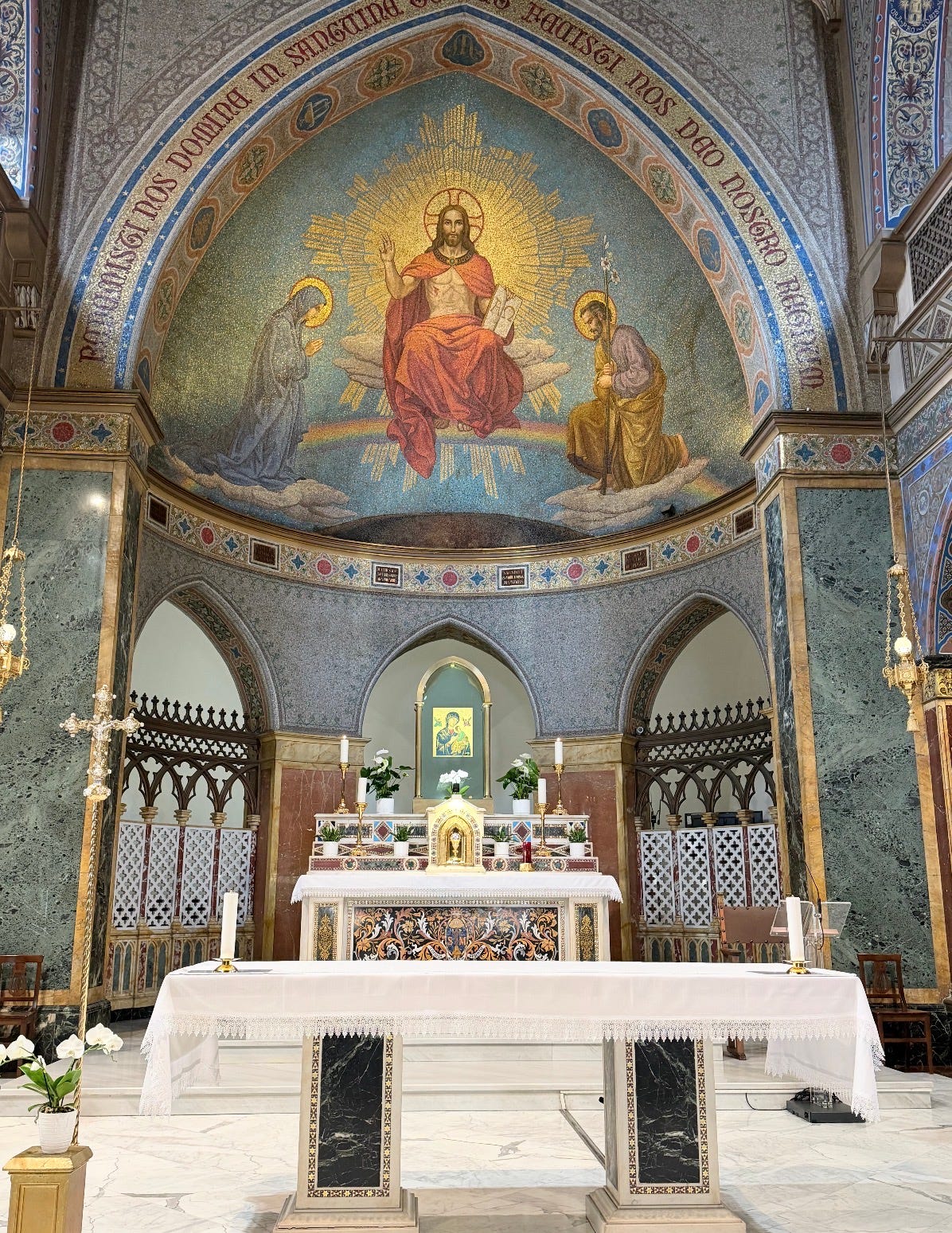
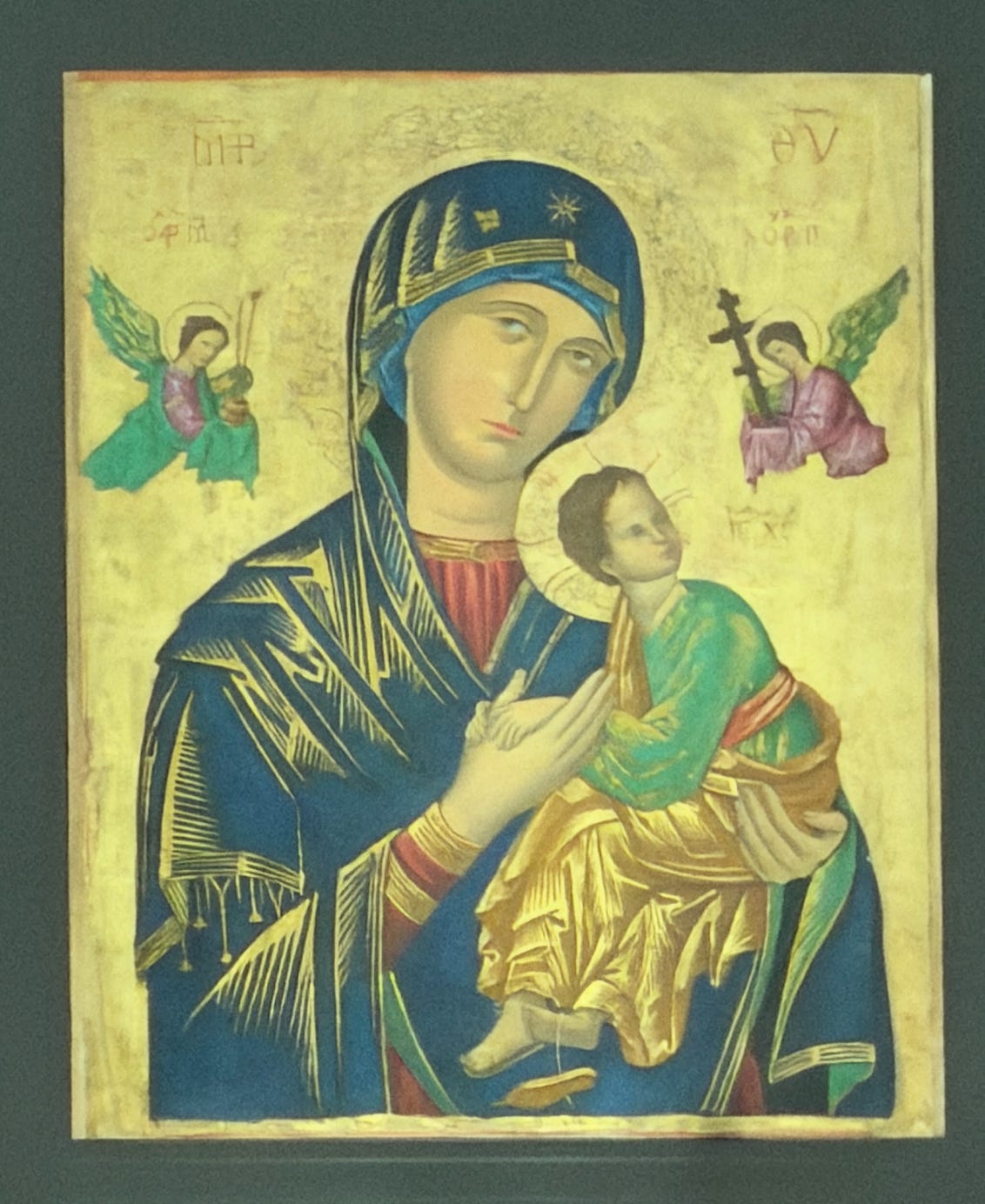
Instead, I visited a church where there will be a Mass at 5:30 pm. It is a Redemptorist Church, which has the famous icon of Our Lady of Perpetual Help. Here’s what it looks like behind the altar, as well as a close up of the image.
We have had this icon in our house for many years. How wonderful that I could see the original icon, which I had no idea was in Rome. I had no idea this church even existed.
I would not have found this church, because it is behind and back from the road as you walk towards the basilica, except that I saw a lady walking in the other direction making the sign of the cross reverently as I passed. So I looked back, in the direction towards which she was looking, and found the church. There’s a lesson there about how good it is to make the sign of the cross as you pass a church.
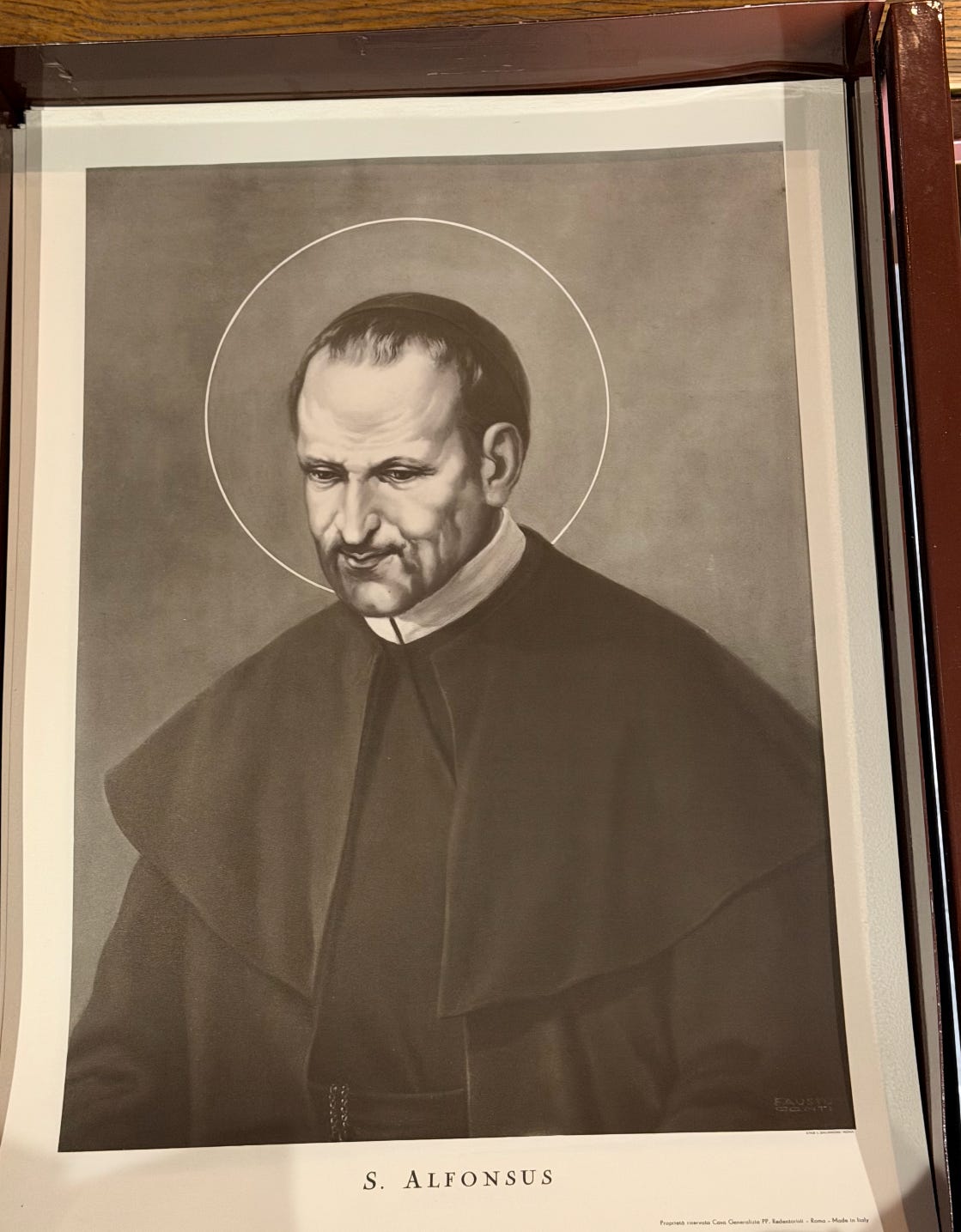
The church is called St. Alphonsus de Liguori all’ Esquilino/ Santuario della Madonna del Perpetuo Soccorso. The mortal remains of St. Alphonsus are in the town where he died, Pagani, Italy, but this church has some relics. Free for the taking as you entered were stunning 11 x 14 prints of the saint who bears the title, “Prince of Moral Theologians”:
I wish I had some way of transporting one or two back home, because I have studied his works for many years. My recent book, Be Good Bankers: The Economic Interpretation of Matthew’s Gospel, was strongly shaped by this saint’s teachings in his book, Preparation for Death.
(By the way, I brought along a copy of Be Good Bankers with the idea that I would give it to the Holy Father, if I can identify an intermediary. We’ll see!)
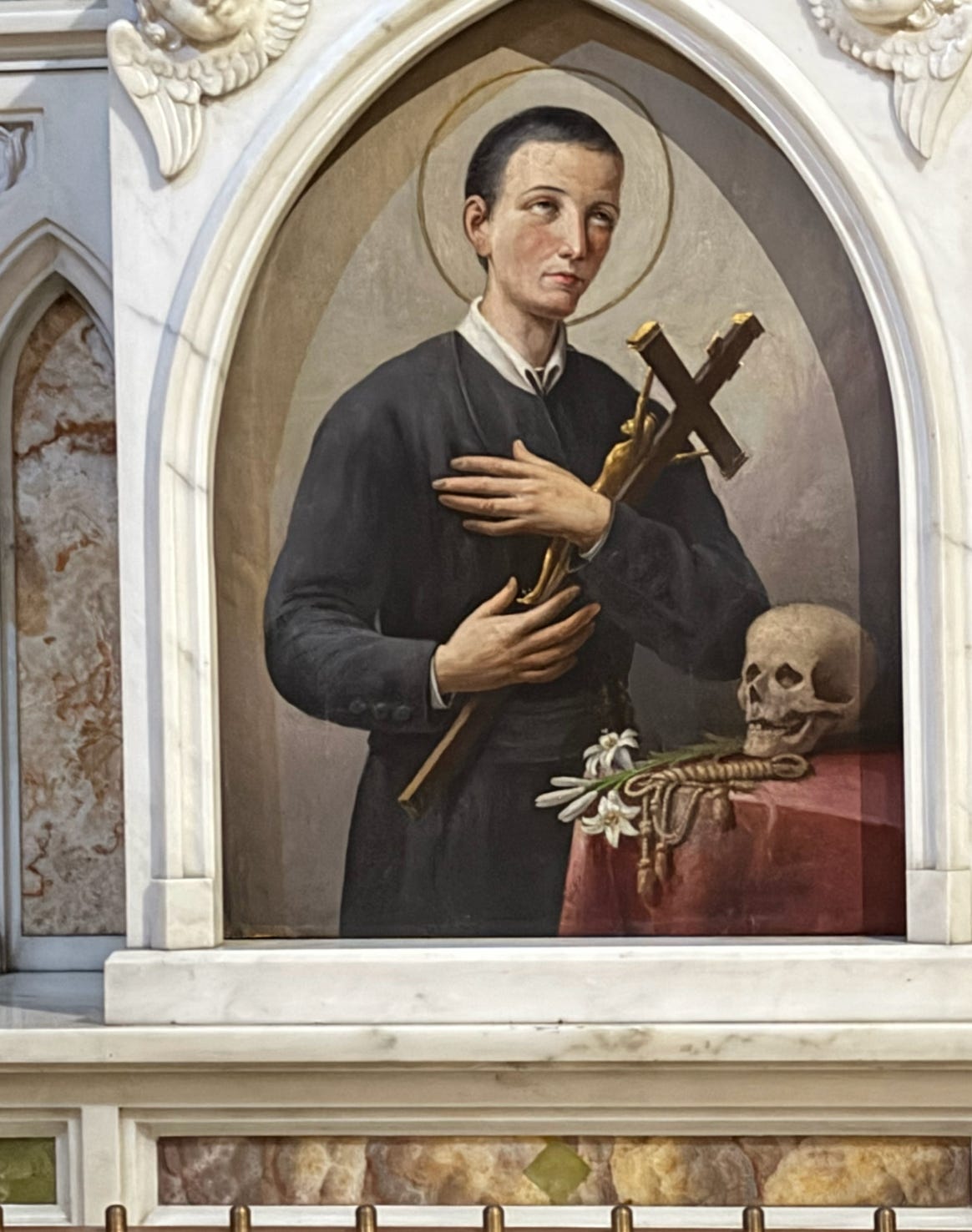
There is a shrine in the church to another great Redemptorist saint, St. Gerard Majella. This saint too my wife and I have had a strong devotion to, since we saw a statue of him in the St. Anne de Beaupré shrine in Canada, which we visited on our honeymoon. He is regarded as a patron saint of expectant moms, and, by extension, of all issues related to fertility.
For a long time I had thought that the phrase, “built better than they knew,” was coined by John Courtney Murray. He uses it in his book, We Hold These Truths, to refer back to the American Founding.
But then I came to appreciate (what I should have realized earlier) that Murray took the phrase from the Pastoral Letter of the Third Plenary Council of Baltimore in 1884, which has the following passage:
We consider the establishment of our country's independence, the shaping of its liberties and laws, as a work of special Providence, its framers 'building better than they knew,' the Almighty's hand guiding them. We believe that our country's heroes were the instruments of the God of nations in establishing this home of freedom; to both the Almighty and to His instruments in the work we look with grateful reverence. And to maintain the inheritance of freedom which they have left us, should it ever — which God forbid — be imperiled, our Catholic citizens will be found to stand forward as one man, ready to pledge anew 'their lives, their fortunes, and their sacred honor.'
This sentiment is a little distant from the lugubrious thought of Patrick Deneen and “why liberalism failed”, right?
But notice that in that statement the phrase, “building better than they knew,” is itself in scare quotes, indicating that the bishops were employing an allusion rather than coining the phrase themselves.
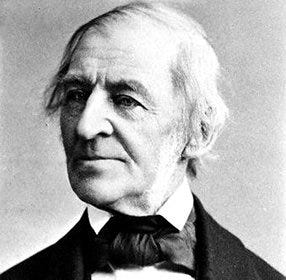
And this is what I discovered last week in researching my column in The CatholicThing: the phrase comes from Ralph Waldo Emerson’s poem, “The Problem” (1840), which I will give below.
Emerson was a Transcendentalist, that is, one of the first free spirits who were “spiritual” without being “religious.” He regarded works produced from within “institutional religion,” such as St. Peter’s, as the welling up of a life force from within, not understood by the practitioners of these religious forms. Emerson the Transcendentalist takes himself to “know” better than these folks did when they built.
The American bishops with great brilliance invert the conceit and say: no, this welling up of statesmanship and republican idealism, as it is rooted in natural law, of which the Church is the great custodian, is actually understood and interpreted correctly by the “institutional” Catholic Church.
The Problem
I like a church; I like a cowl;
I love a prophet of the soul;
and on my heart monastic aisles
Fall like sweet strains, or pensive smiles;
Yet not for all his faith can see
Would I that cowléd churchman be.

Why should the vest on him allure,
Which I could not on me endure?

Not from a vain or shallow thought
His awful Jove young Phidias brought;
Never from lips of cunning fell
The thrilling Delphic oracle;
Out from the heart of nature rolled
The burdens of the Bible old;
the litanies of nations came,
Like the volcano’s tongue of flame,
Up from the burning core below,—
The canticles of love and woe;
The hand that rounded Peter’s dome,
And groined the aisles of Christian Rome,
Wrought in a sad sincerity;
Himself from God he could not free;
He builded better than he knew;—
The conscious stone to beauty grew.

Know’st thou what wove yon woodbird’s nest
Of leaves, and feathers from her breast?
Or how the fish outbuilt her shell,
Painting with morn each annual cell?
Or how the sacred pine-tree adds
To her old leaves new myriads?
Such and so grew these holy piles,
Whilst love and terror laid the tiles.
Earth proudly wears the Parthenon,
As the best gem upon her zone;
And Morning opes with hast her lids,
To gaze upon the Pyramids;
O’er England’s abbeys bends the sky,
As on its friends, with kindred eye;
For, out of Thought’s interior sphere,
These wonders rose to upper air;
And nature gladly gave them place,
Adopted them into her race,
And granted them an equal date
With Andes and with Ararat.

These temples grew as grows the grass;
Art might obey, but not surpass.
The passive master lent his hand
To the vast soul that o’er him planned;
And the same power that reared the shrine,
Bestrode the tribes that knelt within.
Ever the fiery Pentecost
Girds with one flame the countless host,
Trances the heart through chanting choirs,
And through the priest the mind inspires.
The word unto the prophet spoken
Was writ on tables yet unbroken;
The word by seers or sibyls told,
In groves of oak, or fanes of gold,
Still floats upon the morning wind,
Still whispers to the willing mind.
One accent of the Holy Ghost
The heedless world hath never lost.
I know what say the fathers wise,--
The Book itself before me lies,
Old Chrysostom, best Augustine,
And he who blent both in his line,
The younger Golden Lips or mines,
Taylor, the Shakspeare of divines.
His words are music in my ear,
I see his cowléd portrait dear;
And yet, for all his faith could see,
I would not the good bishop be.
Credit
From American Poetry: The Nineteenth Century, Volume I, published by Library of America.
The AMEN App by the Augustine Institute has a 30 part audio series of the works of St Alphonsus. Each part is only 8-14 mins. I’m 8 parts in and only after reading this post did I look to see which Saint’s writings I’d been listening to on Death, and now I’ve seen his rendering from his Church in Rome! Technology can be wonderful and make the world smaller.


The AMEN App by the Augustine Institute has a 30 part audio series of the works of St Alphonsus. Each part is only 8-14 mins. I’m 8 parts in and only after reading this post did I look to see which Saint’s writings I’d been listening to on Death, and now I’ve seen his rendering from his Church in Rome! Technology can be wonderful and make the world smaller.