
Read the Prospectus
SpaceX Seems Spaced Out

I guess a substack is getting to be successful when, if you post late in the day, subscribers write and ask where your post is.
This happened to me today. And once again I apologize for this late post. I’ll explain why below.
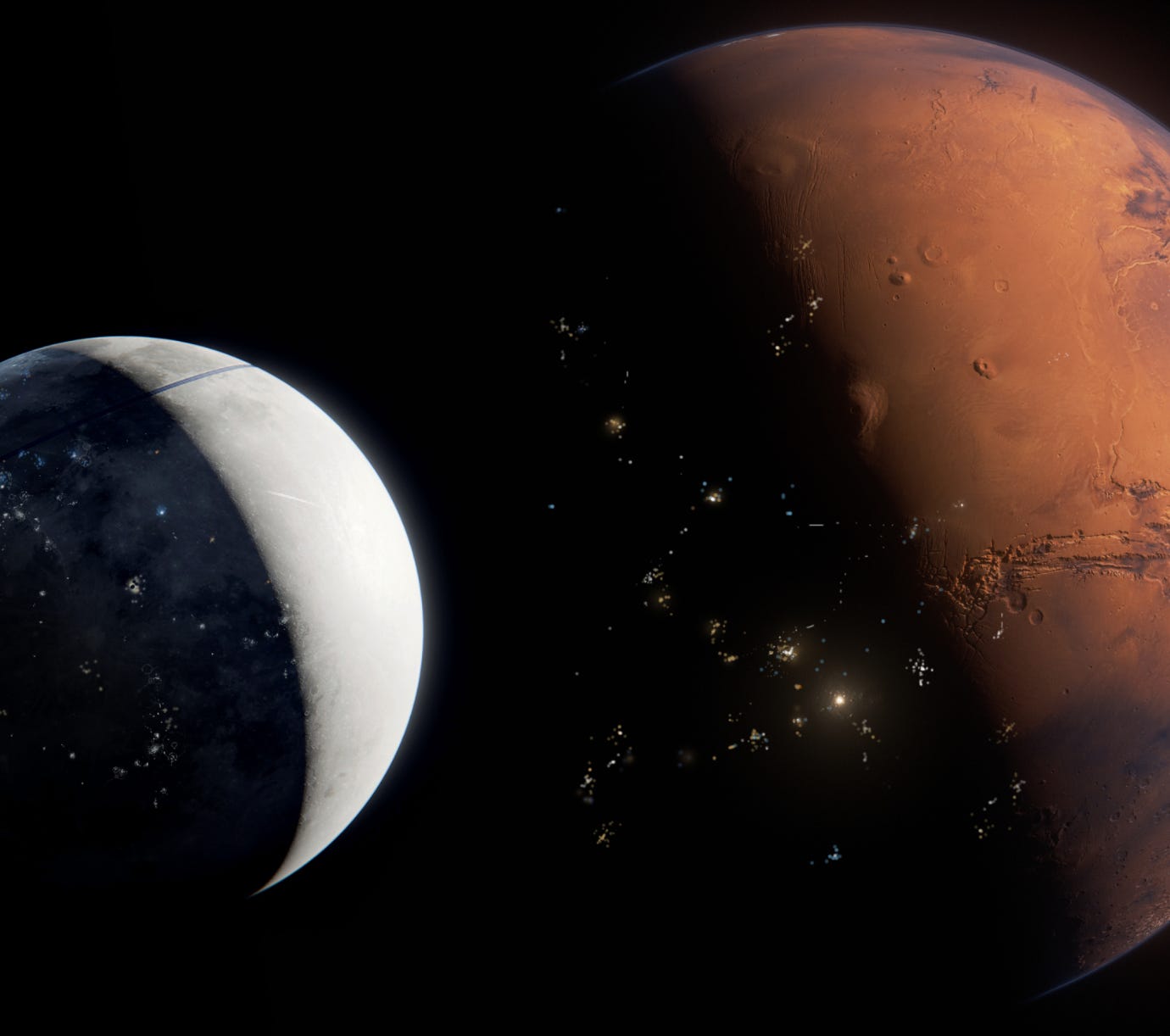
Beauty from the vault: Mars and one of its moons? (Why does it have a blue line on it? Why can you see stars through these bodies?)
But first …
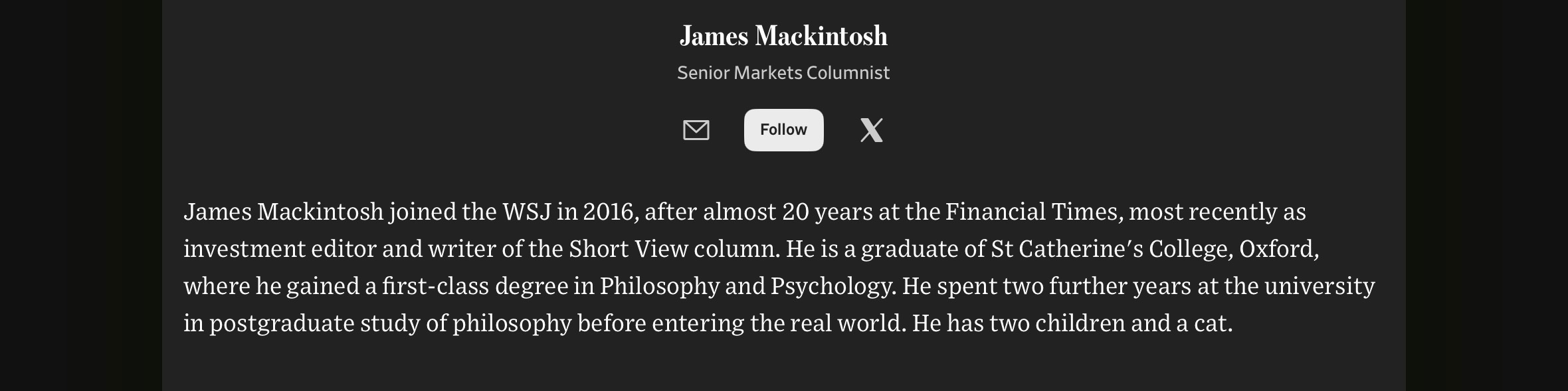
The print WSJ says nothing about its columnists, but online I found the following about someone whose writing I’ve very much admired and learned from, James Mackintosh:
So he is another example of the strong benefits of an education in philosophy. Keep this fact in mind throughout your life; do not lose sight of it.
He provides his own bio. He can say whatever he wants about himself to identify himself. But what he has chosen to emphasize most of all is that he has studied philosophy seriously, even at a postgraduate level, at Oxford.
I wonder though about the cat. In this kind of description, of a lifespan, shouldn’t one give all of one’s animals, not just the animal currently alive, e.g. “N has four children and has had six dogs”? After all, six dogs and four children may be credited to such a person. Well, of course not. In the standard case, to have a child is to cause it to exist.
I apologize for posting late today. I was not jet lagged; I woke up at my usual time (4 am). But I couldn’t find time to post because I was doing background reading for my essay tomorrow in The Catholic Thing, on the SpaceX IPO. You will like the essay.
I found out many things which I had not quite understood before. For example, what drives the rising share price of SPCX since Friday? Is the rising price a sign of the share’s inevitable rise over the next year? Does it prove that investors have confidence in the company?
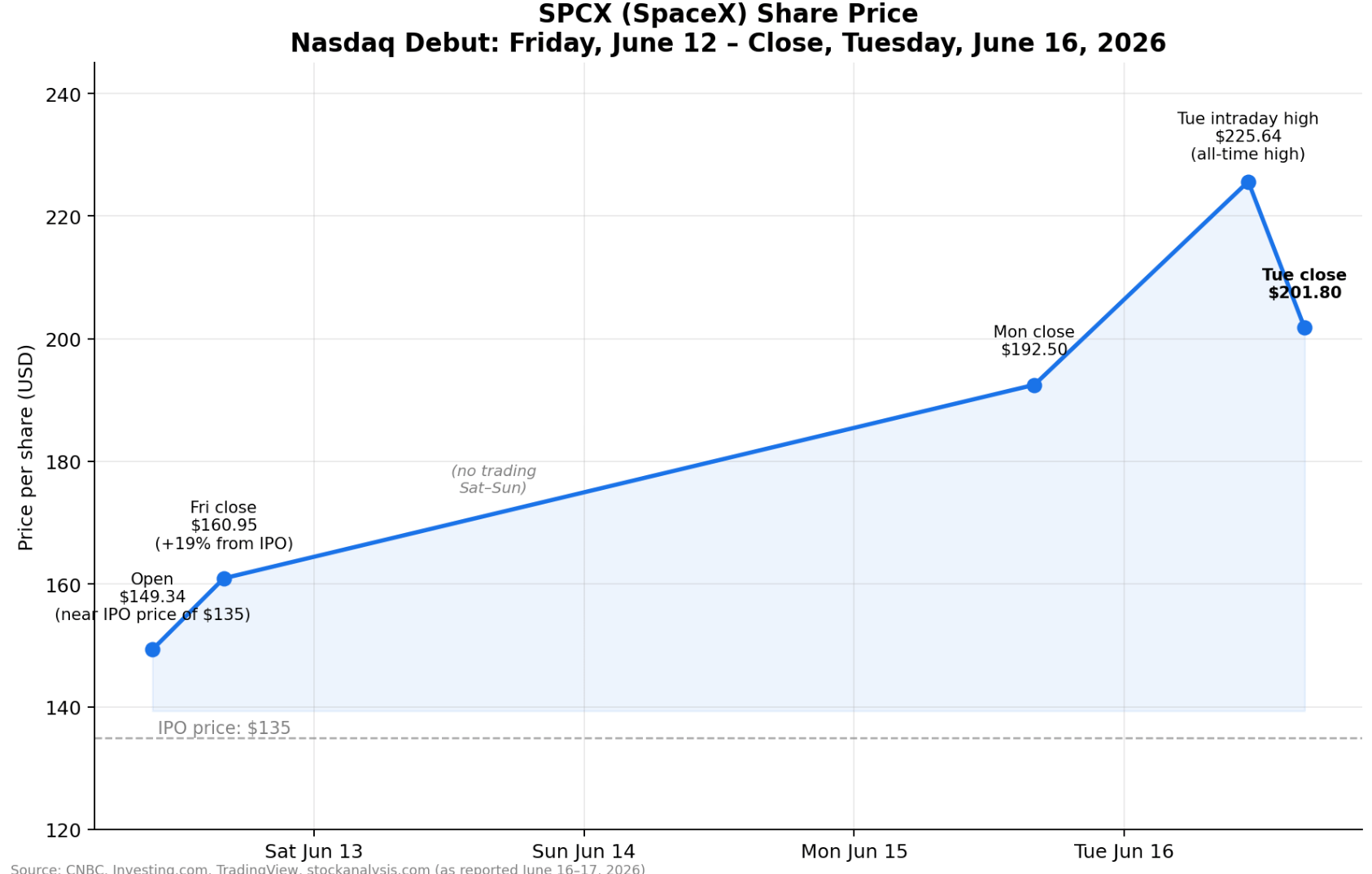
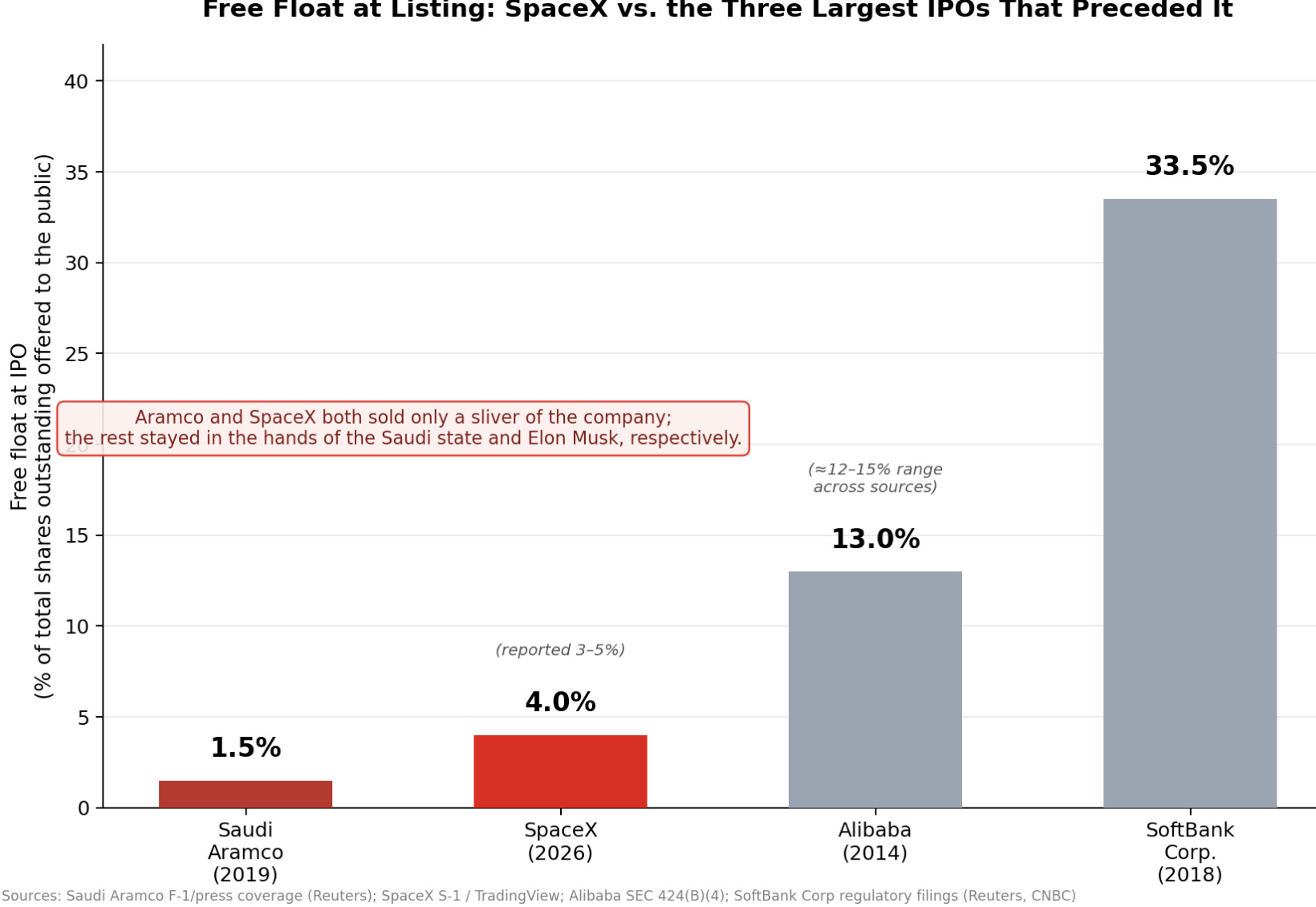
No, it’s probably a “meme” effect, which is the result of the very small “free float” of the IPO. The “free float” is the percentage of shares of an IPO that are not locked up and can be traded on an exchange. Look at this chart:
Another thing I didn’t quite understand fully was Elizabeth Warren’s argument that it was manipulative for Musk and the SPCX underwriters to have arranged to have the rules changed for including companies in indices.
Warren argued in her letter to Paul Atkins, the SEC Chairman, that the SPCX IPO was highly speculative, and that it was wrong to include it in an index. She said that mom and pop investors look to buy funds which track the indexes, “passive investing,” in order to avoid risk. But once SPCX gets included in these indexes, these investors become compelled to buy SPCX. At the same time, the demand created by indexes needing to buy the shares props up the share value. It’s a racket, she claims, which transfers wealth from the ordinary investor to the investment banks.
The argument is basically true, but the effects are very slight, for two reasons. First, the most important index, the S&P 500, did not relax its rules and will not be including SPCX. The S&P 500 continues to hold that at least a year must have passed since the IPO and a company must have shown four successive quarters of profitability to be included. Second, the effect of a share’s inclusion in an index can be limited if a company’s free float is small.
These can seem like technicalities, but I was happy to get clear about them.
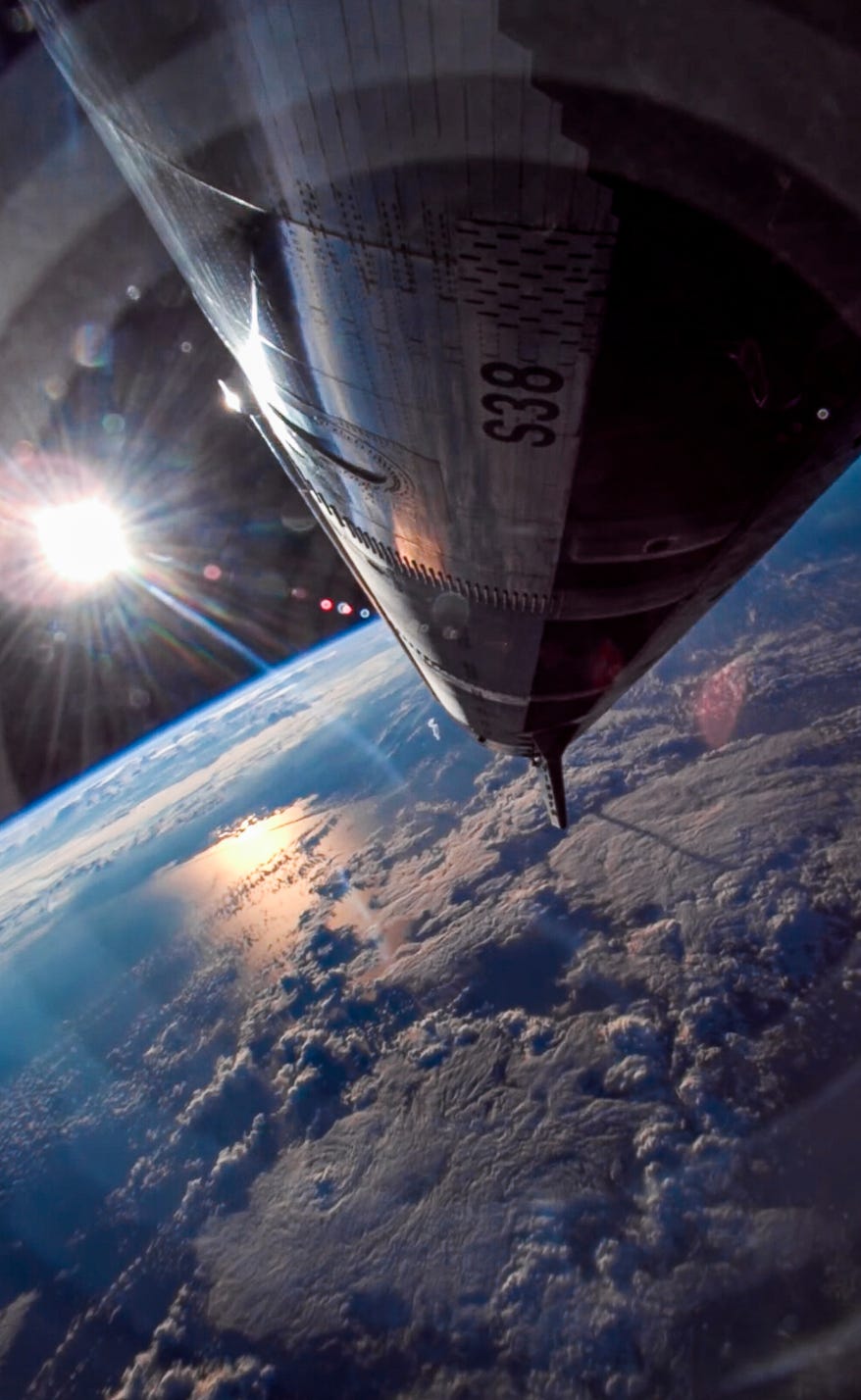
But what interested me the most this morning was studying the prospectus of Space Exploration Technologies Corp, “SpaceX”.
What is a prospectus? After the stock market crash in 1929, Congress mandated (in the 1933 Securities Act) that any new company raising money from the general public needed to file a report (called an “S-1”) detailing its business plan and risks, with audited financial statements.
SpaceX’s prospectus is very odd indeed. It’s filled with color pictures of outer space and rockets, such as those two above.
But consider its Mission Statement:
Our Mission
Our mission is to build the systems and technologies necessary to make life multiplanetary, to understand the true nature of the universe, and to extend the light of consciousness to the stars. To do this, we have formed the most ambitious, vertically integrated innovation engine on (and off) Earth with unmatched capabilities to rapidly manufacture and launch space-based communications that connect the world, to harness the Sun to power a truth- seeking artificial intelligence that advances scientific discovery, and ultimately to build a base on the Moon and cities on other planets.
Those are bizarre clauses, about understanding the true nature of the universe and extending the “light of consciousness.” They are repeated various times throughout the prospectus.
Apparently they are holdovers from how Musk used to describe Grok.
The prospectus has two different sections entitle “Why This Matters Now.” (Can you imagine an appliance company or golf ball company saying that it really matters now that this company get funded?)
Here’s the pressing need:
For the entirety of its existence, human civilization has lived on a single celestial body: Earth. The current paradigm, in which human civilization is confined to one planet, exposes humanity to existential threats that are unpredictable and uncontrollable on a planetary scale. These threats include naturally occurring catastrophic events—such as asteroid impacts, volcanic activity, or solar fluctuations—as well as man-made global conflicts. Geological and astronomical records indicate a non-zero probability of extinction-level events occurring over periods measurable in millions of years. Reliance on a single planetary home constitutes a single point of failure and carries existential risk with a probability of one that must be solved. By moving beyond the only home we have ever known, we ensure species-level redundancy and that the light of consciousness will not be tied to a single planet subject to the inevitable hazards of a harsh and vast universe. We do not want humans to have the same fate as dinosaurs. We want to give them a reason to look ahead with excitement, with the prospect that we are entering an age of abundance with an endlessly prosperous and exciting future. (136)
Another picture from the prospectus:
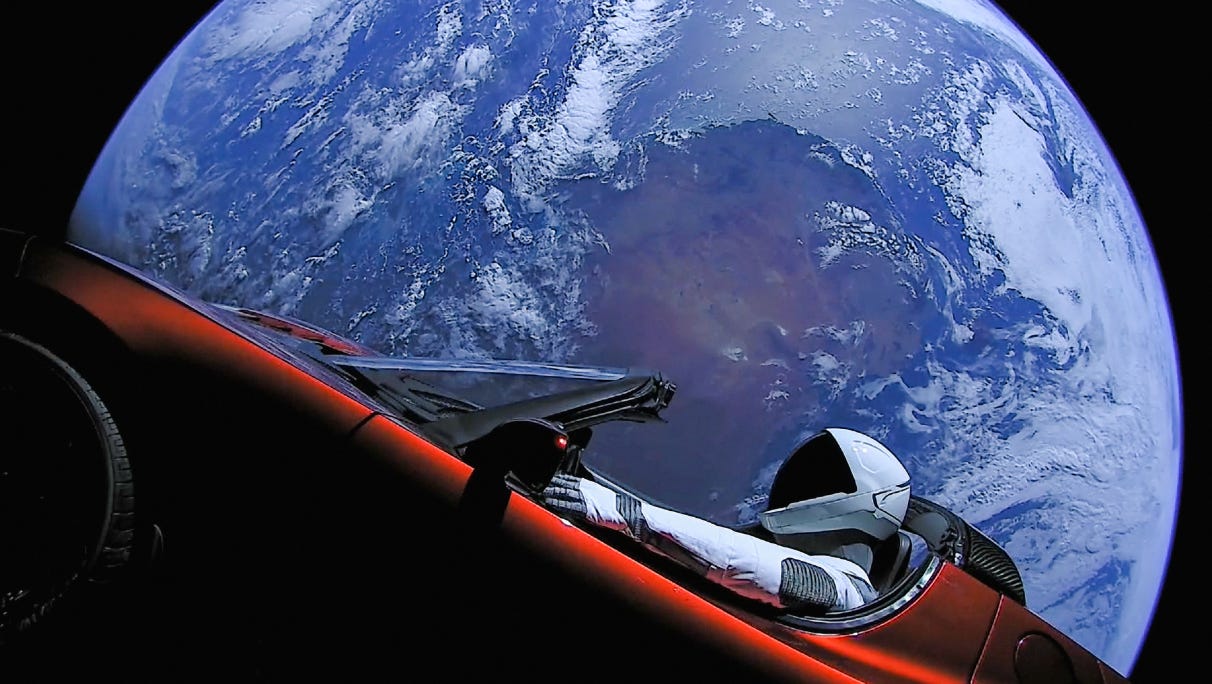
It sure seems like crazy stuff to me.
Anyway, you can read my take on it tomorrow, in The Catholic Thing.
Ciao!