
Rome Pilgrimage
Custodian of Paul’s Bones

Today was my free day in Rome. Tomorrow, I fly back.
I spent most of the day meeting people, for lunch (2-3p), for convos (3-4p), in visiting an international college (4:30-5:30p), for dinner (7-9p), and for drinks (9-12:30am). Very Roman. I spent time with very fine men who liked to laugh and talk, very smart, and who like good food and drink.
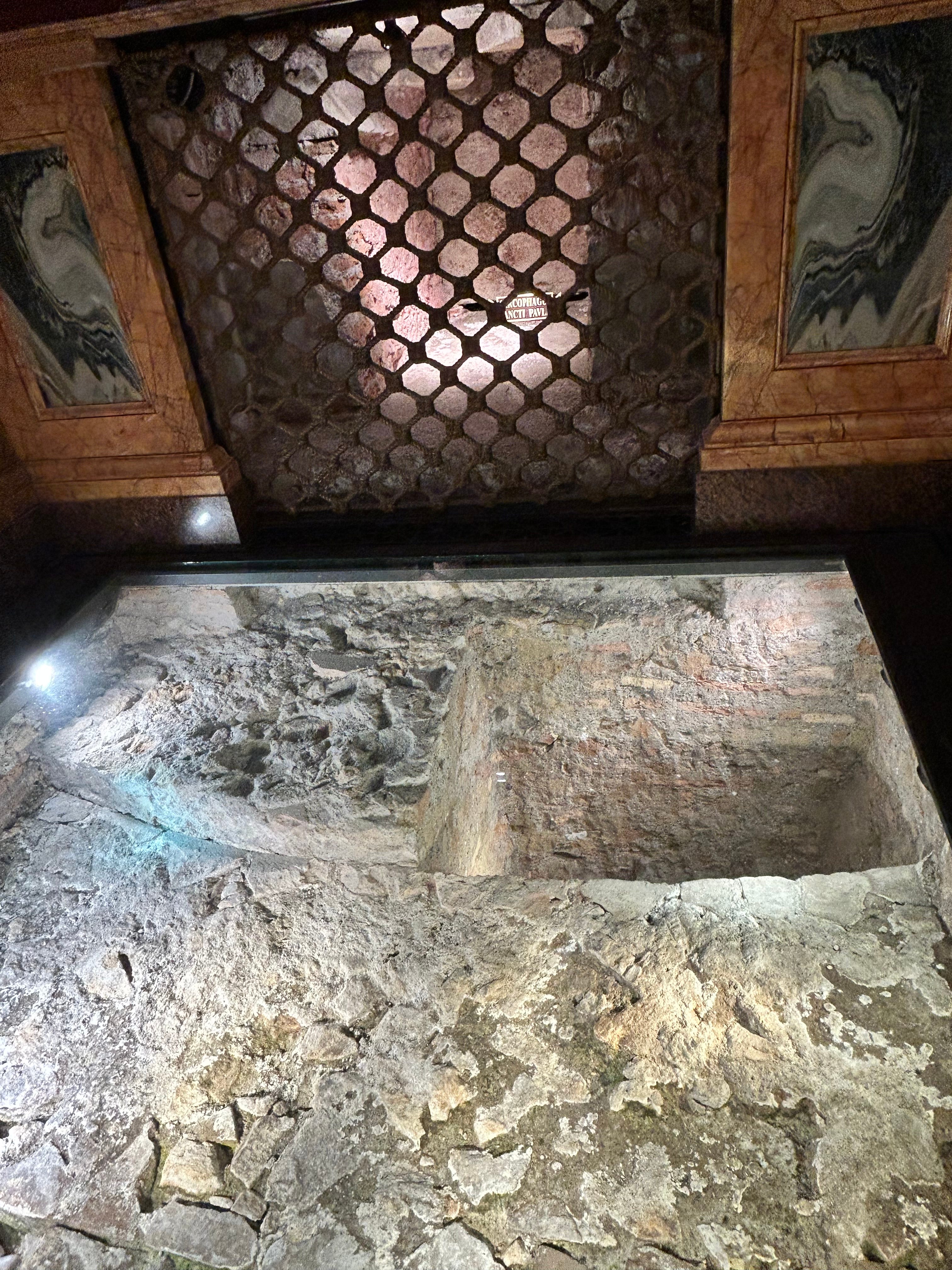
But not to worry that I didn’t mortify myself on a Friday in Lent. In the morning, I went on a pilgrimage to St. Paul Outside the Walls, walking the seven miles to the basilica and back, saying all four sets of mysteries of the Rosary, and praying one of those sets in Latin kneeling looking at a wall of the sarcophagus where St. Paul is buried.
Lots of people are traveling to Assisi to contemplate the bones of St. Francis which are exposed this month. For me, it was sufficient to be only a few feet away from the bones of St. Paul:
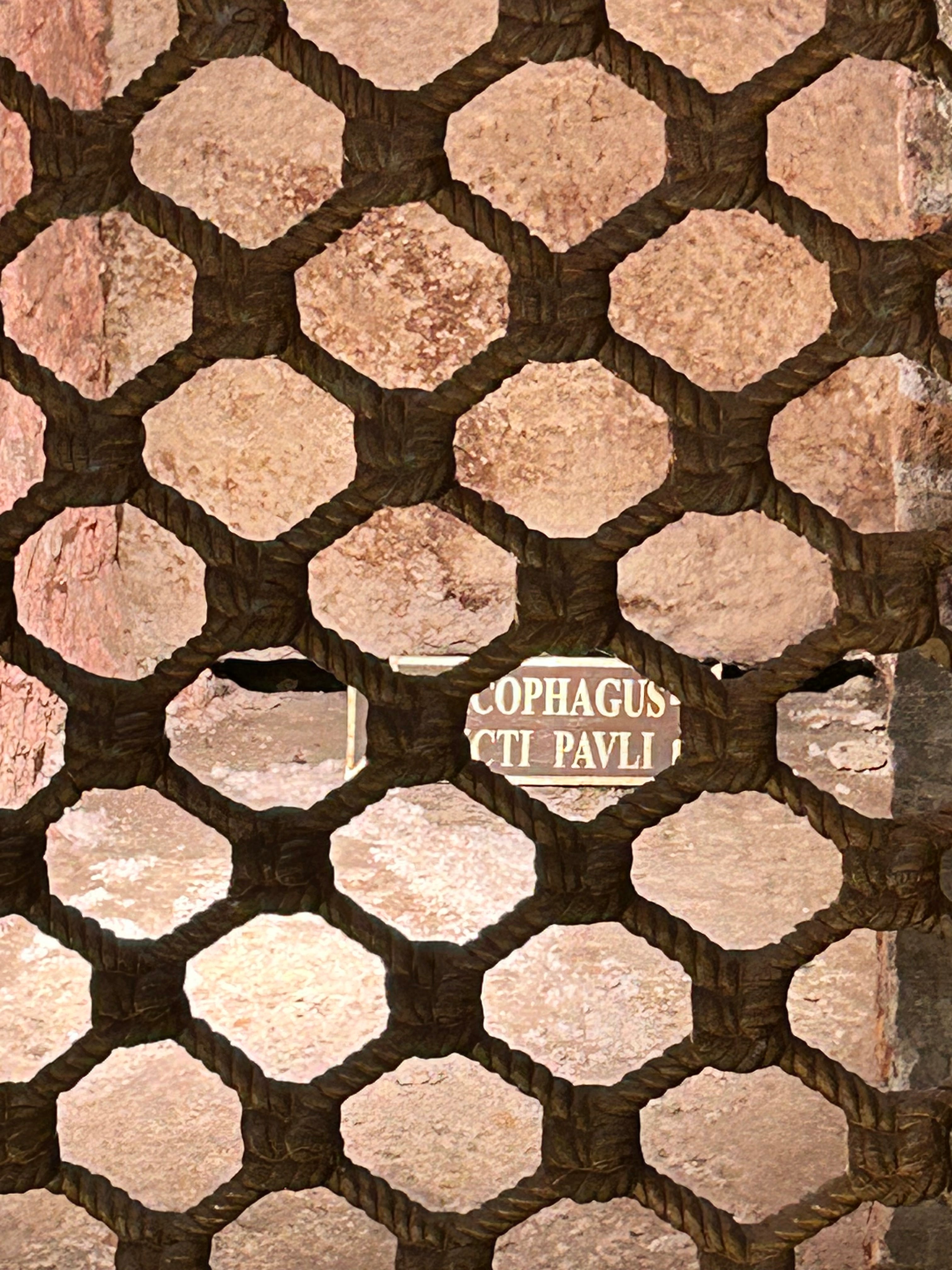
That’s the close up. (By the way, the eyes and brain automatically filled in for me the missing letters so that it did read, SARCOPHAGUS SANCTI PAULI. But would they do the same for someone who did not read Latin?)
Here’s how it looked from where I prayed:
St. Paul Outside the Walls is one of my favorite places in Rome. The moment you walk into its grounds, you are placed in a contemplative spirit by the calm and beauty of the gardens outside:
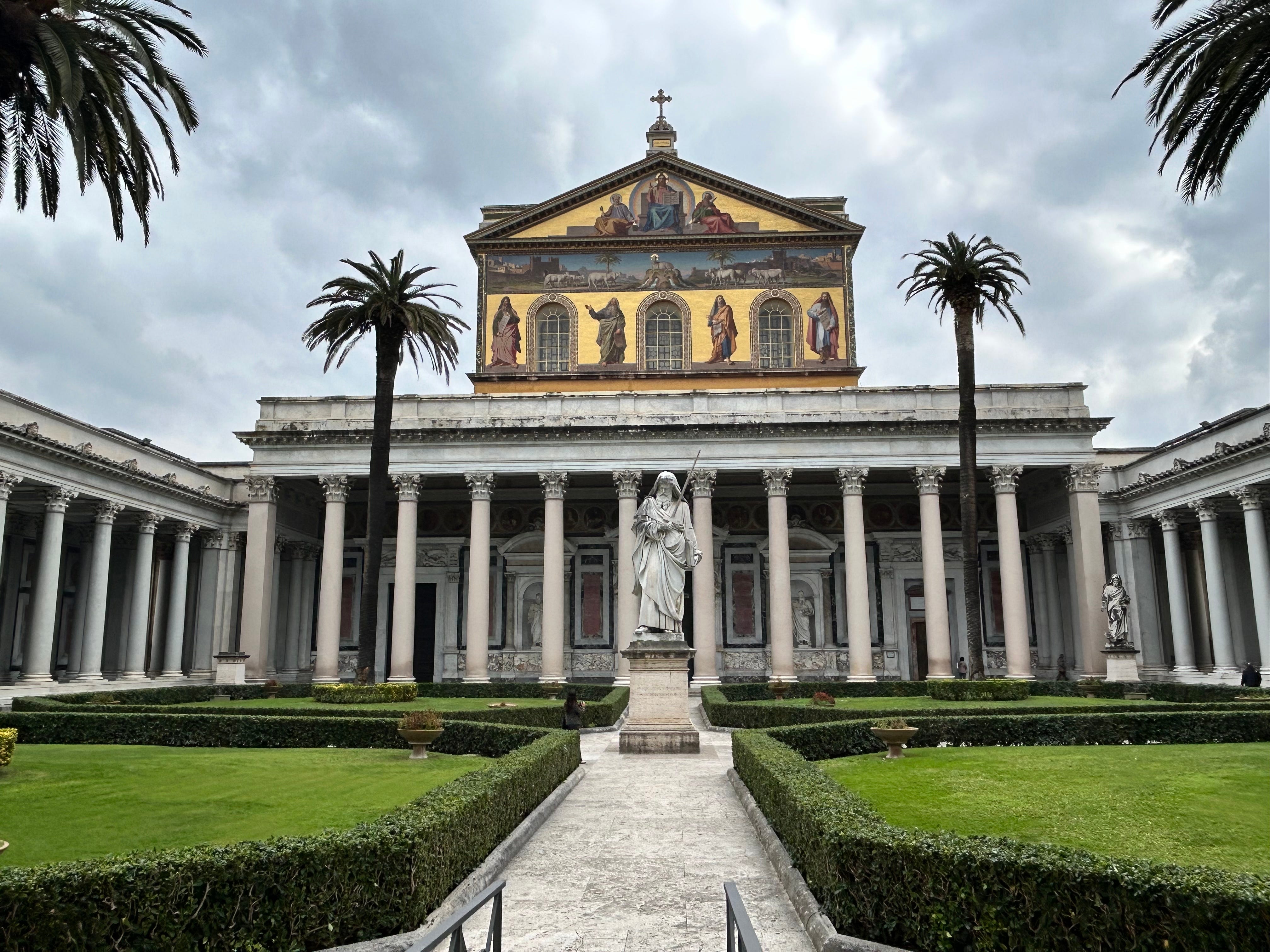
Don’t you love the palm trees? The gardens look even better when the sun is shining.
Inside, the basilica has an astounding gold-leafed ceiling:
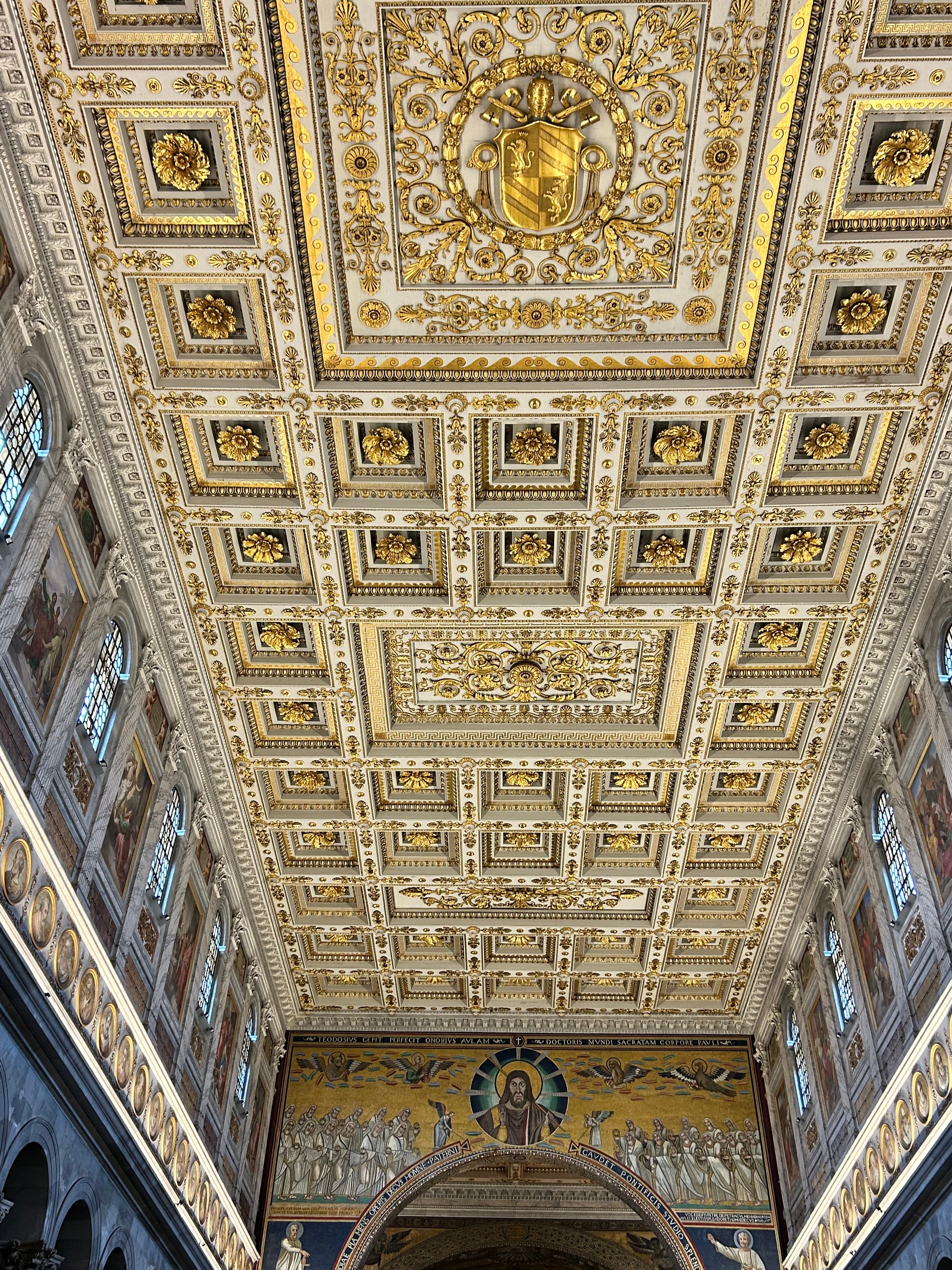
The basilica is famous for having portraits of all the Popes in a row around the top of the wall, as you can see above, ending with Pope Leo XIV:
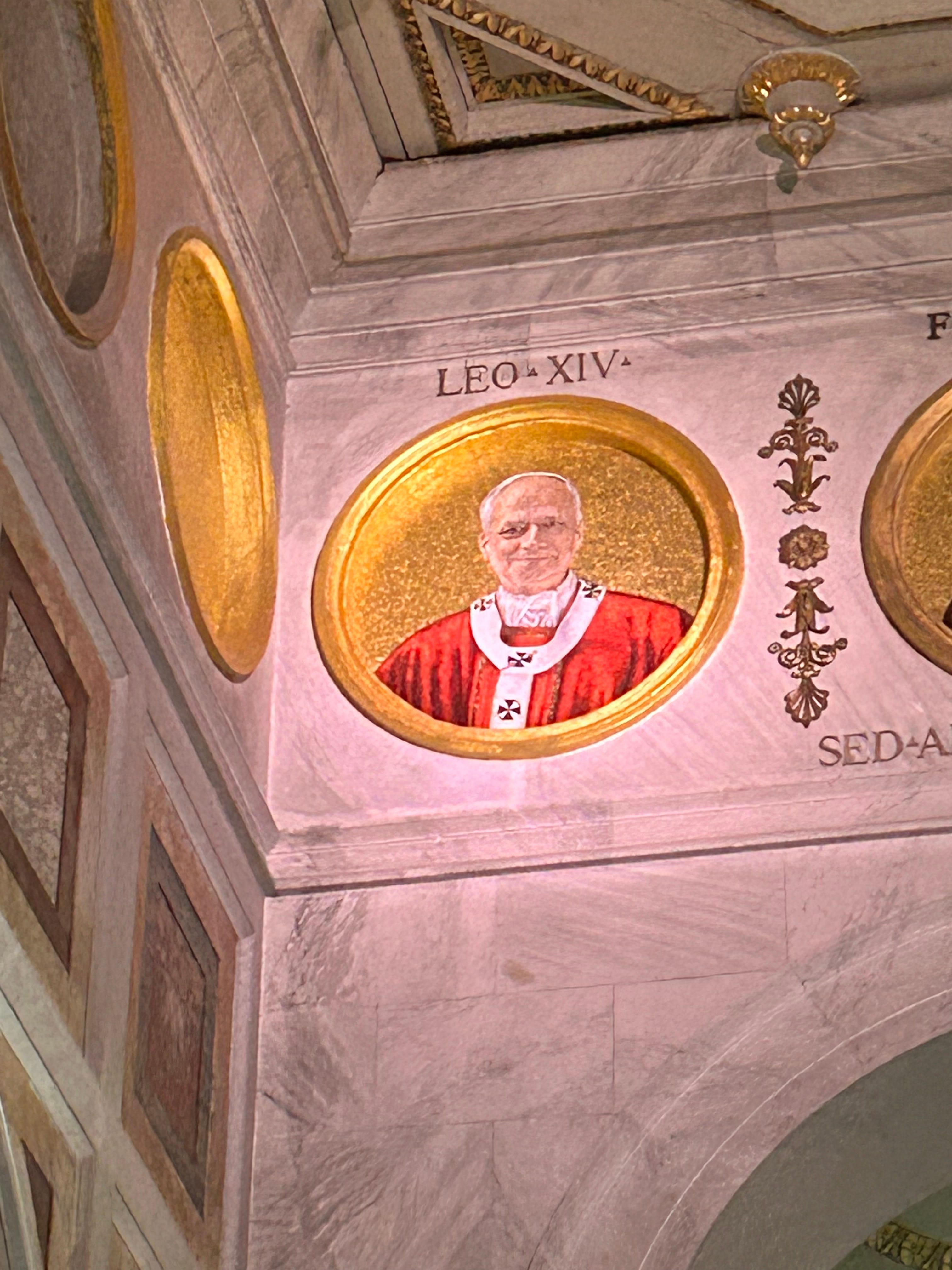
Some have held that when the portraits give out, the world will come to an end. You can see that we still have a little bit of time left, on this theory:
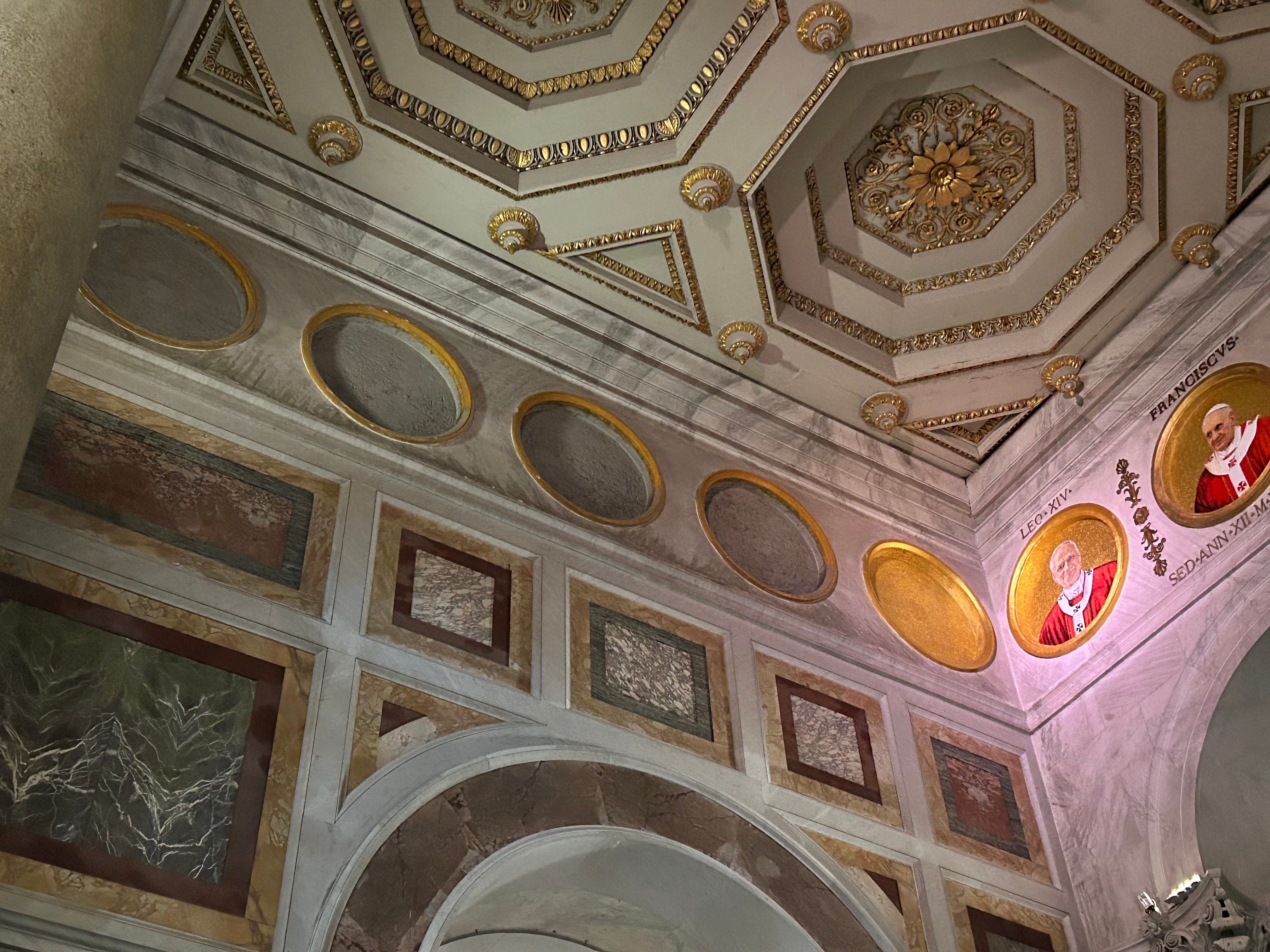
Five spots should give us between 50 and 100 years to repent.
But in the mosaic above the main altar you can see the reason for my pilgrimage to this holy place in particular:
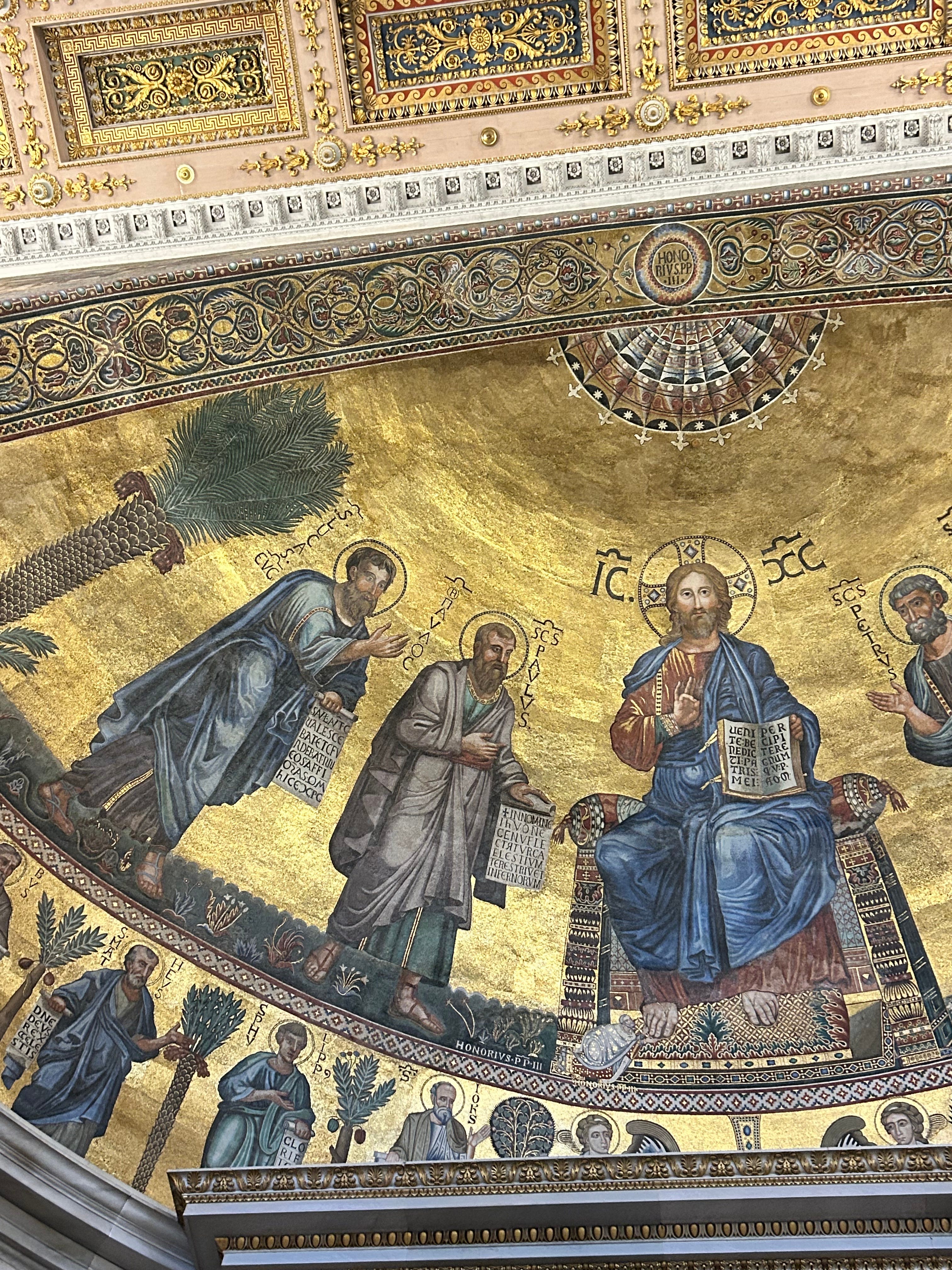
I am working now on my last of four gospel books, on the gospel of St. Luke. My book is based on the hypothesis that Luke’s gospel is the “Pauline” gospel, that St. Paul is “the person behind this gospel,” as Peter is for Mark, Mary for John, and the ambitious tax collector is for Matthew. And there you see Luke along with Paul in service of the Lord.
As I was walking away from the basilica, I thought of my “separated brethren,” the Protestants who love St. Paul’s letters so much, and wondered why they don’t give thought (although maybe they do) to the Church which has been the custodian of St. Paul’s very bones for 2000 years.
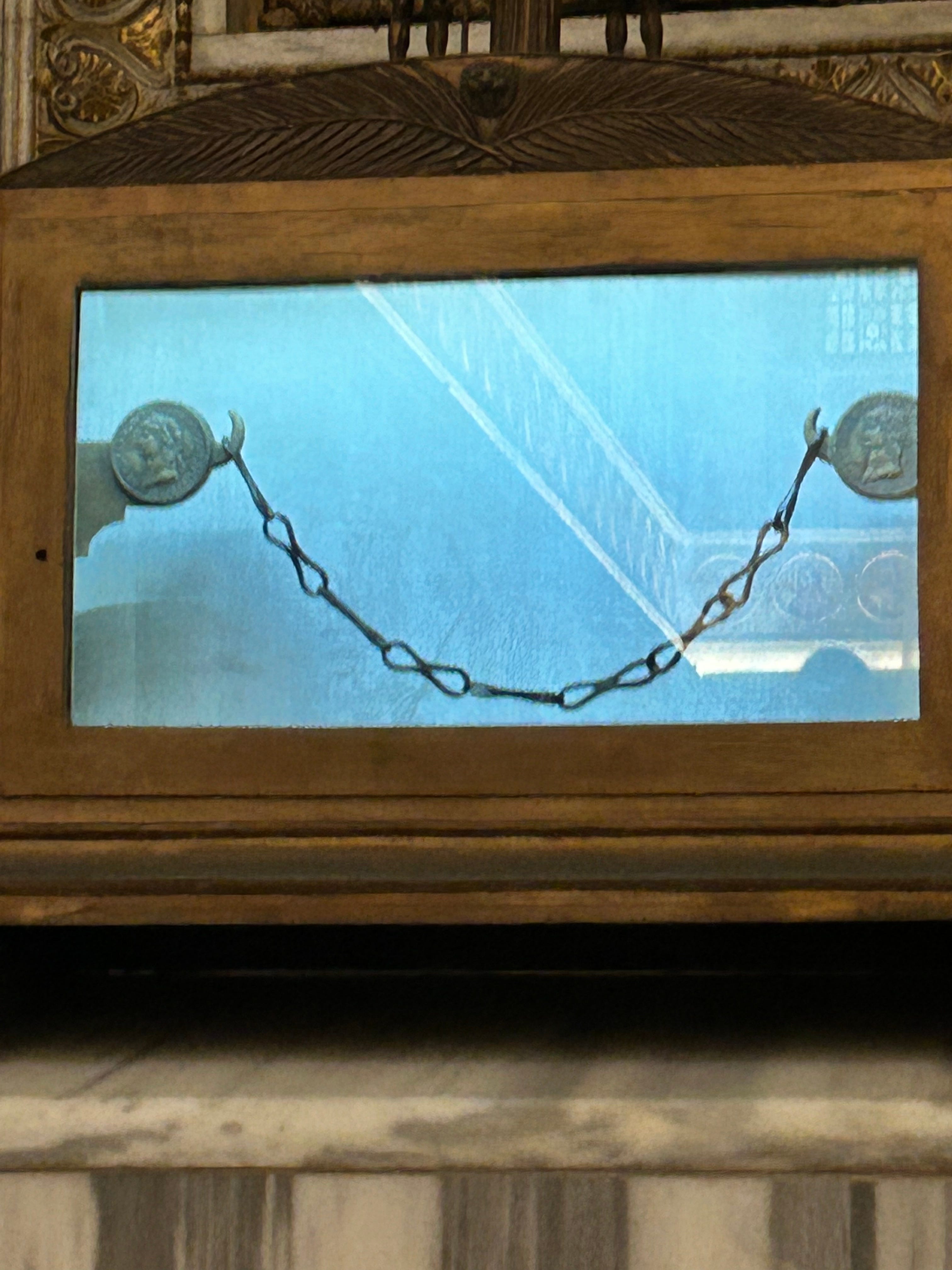
I wish I could tell you about the edifying, inspiring, humorous, probing, fascinating conversations I had with friends and colleagues today, but confidentiality forbids it. It’s as if I am bound, by St. Paul’s chain:
Finally, I did not forget you.
Thanks for this, Michael. Truly inspiring.